When a component drawing reaches a machining facility, one of the first decisions is selecting the right process. This decision directly affects accuracy, cost, and production time.
CNC turning and CNC milling are the most widely used methods in precision machining. Many components use both, but each process works differently. Each is suited for a specific type of geometry.
Understanding this difference helps designers create better parts and helps buyers make smarter decisions. Choosing the wrong process can increase cost, reduce accuracy, and slow down production.
How CNC Turning Works
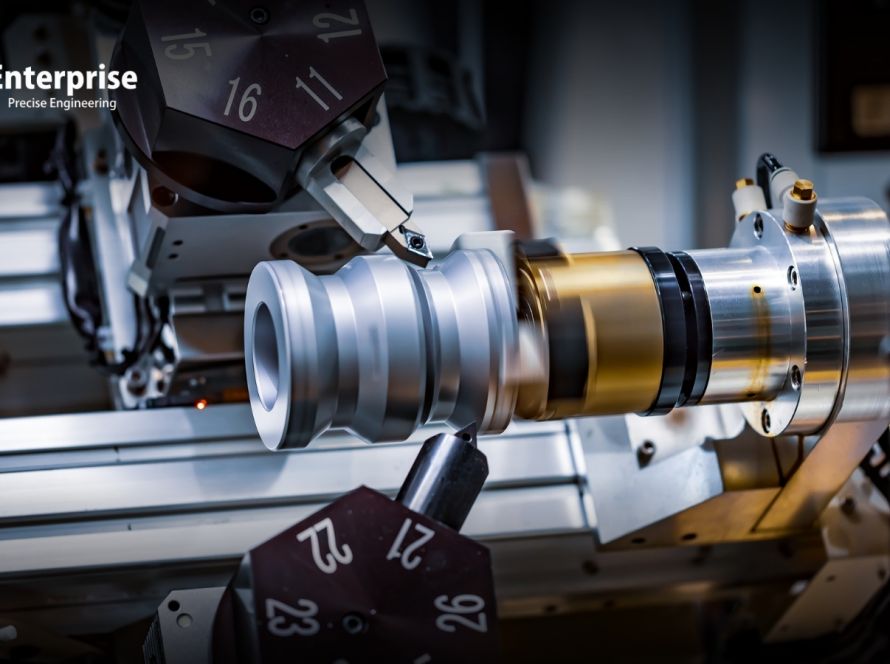
In CNC turning , the workpiece rotates while the cutting tool removes material. The tool moves in a controlled path to shape the rotating part. This process is done on a lathe or turning center.
CNC turning is best for cylindrical or round components. It produces features like outer diameters, inner bores, threads, and grooves. The process is fast because cutting happens continuously as the part rotates.
Modern CNC turning machines also support additional operations. They can perform drilling or milling features on the same setup. This improves efficiency and reduces handling time.
How CNC Milling Works
In CNC milling , the workpiece stays fixed while the cutting tool rotates and moves. The tool cuts material from different directions. This allows more flexibility in shaping the component.
CNC milling is ideal for block shaped or complex parts. It creates flat surfaces, slots, pockets, and detailed contours. It is widely used for components with multiple faces and features.
Advanced milling machines can move in multiple directions. This helps produce complex geometries in a single setup, improving accuracy and consistency.
Choosing Based on Component Geometry When CNC Turning is the Right Choice
CNC turning is the best option when the component is round or symmetrical. It is highly efficient for parts like shafts, pins, bushings, and threaded components.
This process works well when dimensions depend on diameter and length. It also ensures strong concentricity between features. This is important in rotating components.
CNC turning is also suitable for high volume production. It delivers faster cycle times and consistent quality for repetitive parts.
When CNC Milling is the Right Choice
CNC milling is suitable for parts that are flat, block shaped, or complex. It is ideal for components with multiple surfaces and detailed features.
This process is used when features like slots, pockets, and holes need precise positioning. It also supports angled and 3D surfaces.
CNC milling is preferred when design complexity is high. It provides flexibility and accuracy for advanced component geometries.
When You Need Both CNC Turning and CNC Milling
Some components require both processes to achieve the final shape. A part may be turned first to create round features and then milled for additional details.
Using both processes improves functionality and precision. It also reduces the need for multiple setups.
Modern machines combine both operations in one system. This reduces errors, saves time, and improves overall efficiency.
The Role of Tolerances in Process Selection
Tolerance requirements influence process selection. CNC turning naturally maintains concentricity and roundness. This makes it ideal for cylindrical components.
CNC milling is better for positional accuracy. It ensures precise placement of holes and features on flat surfaces.
When a component requires both types of tolerances, a combination of turning and milling is necessary.
The Role of Material in Process Selection
Material behavior affects machining performance. In CNC turning, continuous cutting generates heat. Tough materials require proper tooling and cooling.
In CNC milling, cutting is intermittent. This allows tools to cool between cuts. It can be helpful for certain materials.
Choosing a supplier with material expertise is important. Experience with specific materials ensures better accuracy and longer tool life.
Production Volume Considerations
CNC turning is highly efficient for large volume production of round parts. It allows fast and consistent output.
CNC milling is slightly slower due to complex movements. However, it is necessary for detailed and multi surface components.
For small batch production, both processes require setup time. A well organized machining setup can reduce delays and improve efficiency.
Quick Reference Guide
Choose CNC Turning when
• Part is cylindrical or rotational
• Features include diameters, bores, and threads
• Concentricity is critical
• High volume production is required
Choose CNC Milling when
• Part is block shaped or complex
• Features include slots, pockets, and flat surfaces
• Hole positioning is important
• 3D surfaces are required
Choose Both when
• Component combines round and complex features
• High precision is required across multiple features
• Reducing setups and errors is important
Choosing the right machining process is critical for quality and efficiency. A correct decision reduces cost, improves accuracy, and ensures better performance.
If you are looking for reliable CNC turning and CNC milling solutions, work with experts who understand component geometry and deliver consistent results.
Visit MJ Enterprise for more information.
FAQs
1. What is the main difference between CNC turning and CNC milling
CNC turning rotates the material while CNC milling rotates the cutting tool. This difference defines the type of shapes each process can produce.
2. When should CNC turning be used
CNC turning is best for cylindrical parts like shafts, rods, and threaded components that require rotational symmetry.
3. When is CNC milling preferred
CNC milling is ideal for complex parts with flat surfaces, slots, pockets, and multiple features.
4. Can both CNC turning and CNC milling be used together
Yes, many components require both processes to achieve complete geometry and functionality.
5. Which process is more cost effective
CNC turning is more cost effective for simple round parts, while CNC milling is suitable for complex designs.