Aerospace Machining: How Precision Manufacturing Meets Critical Component Requirements
Aircraft and aerospace systems depend on components that must perform consistently under demanding operating conditions. This makes manufacturing quality an important consideration throughout the aerospace supply chain.
Aerospace Machining combines advanced machining processes, controlled manufacturing methods, dimensional inspection, material knowledge, and documented quality procedures to produce complex components according to defined engineering requirements.
Understanding how Precision Manufacturing supports these requirements can help engineering and procurement teams evaluate machining suppliers more effectively.
What Is Aerospace Machining?
Aerospace Machining refers to manufacturing processes used to produce precision components for aircraft, aerospace systems, and related applications.
Components can range from structural and mechanical parts to housings, brackets, tooling, fixtures, and other engineered parts.
The exact process depends on component geometry, material, tolerance, surface finish, production quantity, and applicable customer or regulatory requirements.
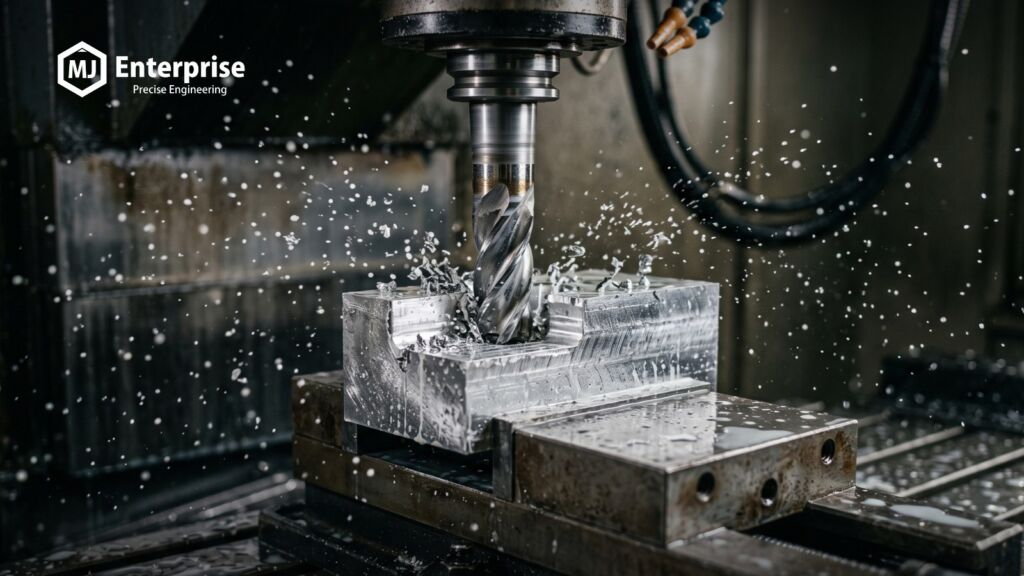
CNC milling, turning, drilling, boring, and five-axis machining may all be used depending on the application.
Why Precision Manufacturing Matters in Aerospace Machining
Precision is important because aerospace components are manufactured according to defined engineering specifications.
A small dimensional variation may affect component fit, assembly, alignment, or performance. Manufacturers therefore need controlled processes capable of producing parts consistently while verifying critical dimensions.
The FAA notes that production approval includes evaluating whether manufacturers can consistently produce aircraft according to approved designs, with quality control and repeatability being important areas of focus.
1. Managing Tight Dimensional Requirements
Aerospace drawings can contain demanding dimensional and geometric requirements.
Achieving them requires more than accurate CNC equipment. Manufacturers must consider workholding, tool selection, cutting parameters, machine stability, temperature, inspection, and process sequence.
Precision Manufacturing Depends on Process Control
When a component requires several machining operations, each stage can influence the next. A planned machining sequence helps reduce unnecessary variation and supports consistent results.
2. Machining Advanced Aerospace Materials
Material selection in aerospace engineering depends on factors such as strength, weight, temperature resistance, corrosion resistance, and application requirements.
Common machining projects may involve aluminium alloys, stainless steel, titanium, nickel-based alloys, and other engineered materials.
Each material presents different machining challenges.
Titanium, for example, requires careful management of cutting conditions and tooling. Nickel-based alloys can also create challenges related to heat and tool wear.
Material experience therefore becomes an important part of supplier evaluation.
3. Producing Complex Component Geometries
Modern aerospace components may contain pockets, contours, holes, angled features, and multiple machined surfaces.
Advanced CNC equipment can help manufacture these geometries accurately.
Five-axis machining can be useful for components requiring access to several surfaces because it may reduce the number of separate setups required.
Fewer setups can also reduce opportunities for repositioning error, depending on the component and manufacturing strategy.
4. Inspection Supports Aerospace Precision Manufacturing
Machining a component is only one part of the process. Manufacturers also need suitable methods to verify that the finished part meets specified requirements.
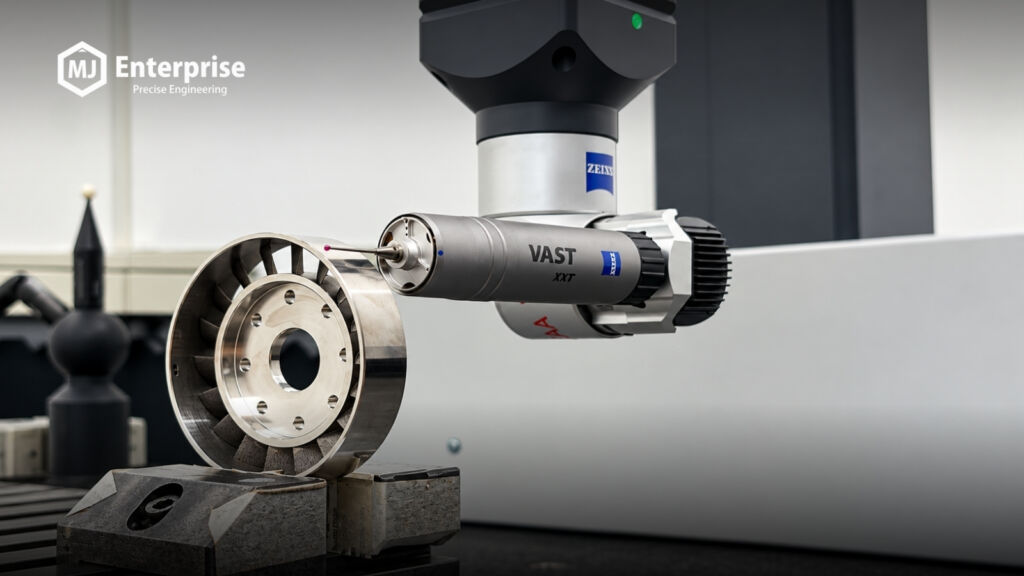
Inspection may include dimensional checks, surface finish verification, coordinate measurement, and other methods defined by the drawing or customer.
For aerospace suppliers, First Article Inspection may also be contractually required. IAQG 9102 standardizes First Article Inspection process and documentation requirements for verification of aviation, space, and defense products.
Controlling Important Characteristics
Certain component characteristics may require additional process attention. IAQG 9103 addresses variation management for identified key characteristics across production processes.
This highlights why aerospace manufacturing is not simply about producing a dimension once. The process must also manage variation over continued production.
5. Quality Systems and Manufacturing Documentation
Documentation is another important consideration in aerospace supply chains.
Depending on the contract and application, requirements may include material records, inspection results, process documentation, certificates, or traceability information.
IAQG states that the 9100 quality management standard is designed for aviation, space, and defense organizations and can be applied across different levels of the supply chain.
Requirements can differ between customers and programs, so buyers should clearly define applicable standards and documentation during supplier qualification.
6. Repeatability Across Production Batches
Producing one acceptable component does not automatically demonstrate a stable production process.
When parts are required repeatedly, manufacturers need to control tooling, machining parameters, inspection, material, workholding, and process changes.
Repeatability becomes particularly important when multiple parts must assemble with other precision components.
How to Evaluate an Aerospace Machining Supplier
Before selecting a supplier, buyers should examine relevant machining experience, equipment, material capabilities, inspection systems, quality procedures, documentation practices, capacity, and technical communication.
Do not assume that owning advanced CNC equipment automatically qualifies a company for every aerospace program. Confirm the certifications, approvals, special process requirements, inspection requirements, and documentation that apply to your specific component.
For example, the FAA distinguishes several types of production approvals, including Production Certificates, Parts Manufacturer Approval, and Technical Standard Order Authorization. Their applicability depends on what is being manufactured and under which approval framework.
For a new aerospace machining requirement, provide the supplier with a controlled drawing, material specification, quantity, tolerance requirements, applicable quality clauses, and inspection expectations. A technical review before quotation can help identify manufacturing risks and clarify whether the supplier has the required capability.
Have a Complex Aerospace Machining Requirement?
From challenging geometries to demanding dimensional requirements, the right machining approach starts with a detailed review of your component specifications. Share your drawings and manufacturing requirements with MJ Enterprise to discuss machining feasibility and production needs.
FAQs
What is Aerospace Machining?
Aerospace Machining involves manufacturing precision components for aircraft, aerospace equipment, and related systems using controlled machining processes. Depending on the component, manufacturers may use CNC milling, turning, drilling, boring, or five-axis machining to achieve specified engineering requirements.
Why is precision important in aerospace manufacturing?
Precision helps ensure that manufactured components conform to engineering drawings and can fit and function as intended. Dimensional accuracy, process control, inspection, material management, and repeatability are therefore important considerations when producing components for demanding aerospace applications.
Which materials are commonly used in aerospace machining?
Aerospace machining can involve aluminium alloys, stainless steels, titanium, nickel-based alloys, and other engineering materials. The selected material depends on component design and application requirements such as weight, mechanical properties, temperature exposure, corrosion resistance, and operating environment.
What should buyers check when selecting an aerospace machining supplier?
Buyers should review machining equipment, relevant industry experience, material knowledge, inspection capability, quality systems, documentation, traceability, capacity, and applicable certifications. Requirements should always be evaluated against the specific drawing, contract, application, and aerospace program involved.
What role does five-axis machining play in aerospace manufacturing?
Five-axis machining allows cutting tools to approach a component from multiple directions. For suitable parts, this can help manufacture complex contours and features with fewer setups. The actual benefit depends on component geometry, tolerance, material, tooling, and process planning.