Prototype to Production: How to Scale Custom CNC Machined Parts Without Losing Accuracy
A prototype proves that a design works. Production has to prove it works every single time. Moving CNC Machined Parts from a few samples to thousands of pieces is where many projects slip. At MJ Enterprise, we have machined components in Vadodara since 1978. In our experience, accuracy rarely fails in one dramatic moment. Instead, it drifts quietly, one small variation at a time.
Why accuracy slips when volume grows
During prototyping, a skilled machinist watches every cut and measures every part. However, that level of attention is hard to repeat across a 5,000 piece order.
Two things change at scale. First, cutting tools wear down over long runs. Second, machines warm up through the shift, and metal expands with heat. As a result, a part that measured perfectly on day one can creep out of tolerance by day ten.
Scaling CNC production is therefore less about speed and more about control.
Design CNC machined parts for production from day one
Design for manufacturability simply means shaping a part so it is easy to machine the same way every time. Small design choices make a big difference later.
For example, internal corners should match the radius of standard cutters. Hole sizes should follow common drill sizes where possible. Walls need enough thickness so they do not flex while being cut.
Tolerances deserve the most attention. Precision CNC machining tolerances cost time and money, so apply them only where the function needs them. Holding 0.01 mm on a surface that only needs 0.1 mm adds inspection time to every single piece.
Clear drawings help too. A recognised standard such as ASME Y14.5 for dimensioning and tolerancing means the designer and the machinist read each dimension the same way.
Lock the process before you scale
Once a prototype is approved, we freeze the process. The same program and tooling run every batch, held in the same fixture. A fixture is a custom holder that grips the part in exactly the same position each time, so the machine never has to guess.
Next comes the first article inspection. This is a full check of the first part made on the production setup, before the rest of the batch runs. At MJ Enterprise, our first article report also records the fixtures and machines used, along with calibration certificates for the measuring instruments. Tool wear needs the same discipline, so tools should be changed on a planned schedule rather than after they fail.
Did you know? Aluminium grows about 0.023 mm for every 100 mm of length when it warms by 10°C. That is why precise measurements are taken at a standard reference temperature of 20°C.
Keep the material consistent
Two bars of the same grade can still behave differently on the machine. Hardness and internal stress vary between batches, and that variation shows up in the finished size.
So every order we ship carries mill test certificates and full material traceability, from raw bar to finished part. This matters even more with tough alloys such as Inconel 625 and 718, where small differences in hardness change how the metal cuts.
Quality checks that keep CNC machined parts accurate at scale
Inspection changes as volume grows. During prototyping, every feature on every part gets measured. In production, that approach becomes too slow, so a planned sampling routine takes over.
Factor | Prototype stage | Production stage |
Quantity | 1 to 50 pieces | Hundreds to thousands |
Main focus | Proving design and fit | Repeating the same result |
Tolerance control | Hand tuned setups | Locked programs and fixtures |
Inspection | Every feature on every part | First article check, then planned sampling |
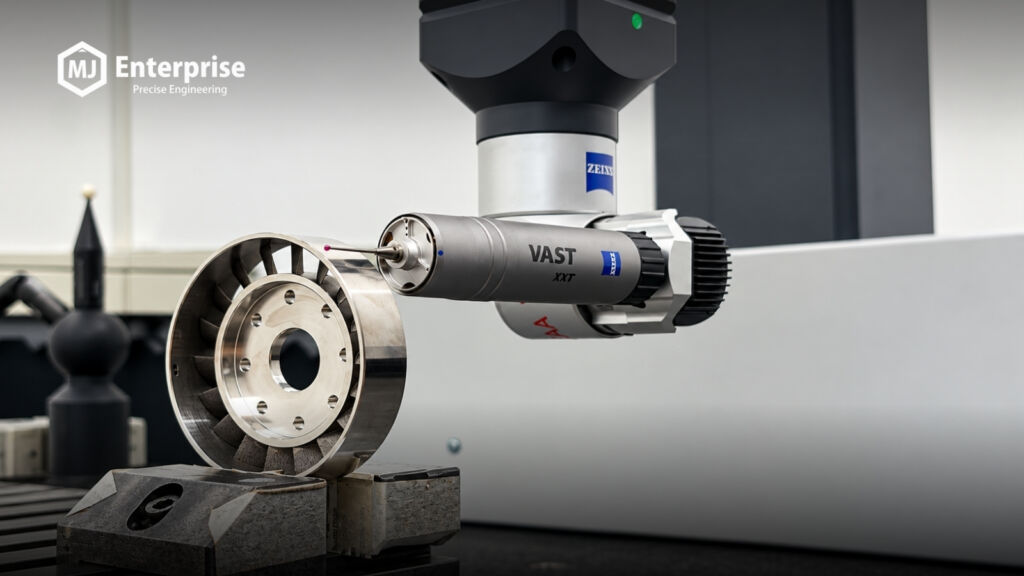
Finished parts are checked on our ZEISS CMM (coordinate measuring machine), where a fine probe touches the part at many points and compares the readings with the drawing. For critical features, we hold tolerances of ±5 microns. Our process control and 5 axis machining pages explain how each stage is checked.
Choosing the right manufacturing partner
The right partner makes the jump from sample to batch feel routine. Look for a supplier that offers:
1. Low volume CNC machining and large production runs under one roof
2. Design feedback before quoting, not after problems appear
3. In house inspection with measurement records you can review
4. Clear material traceability for every lot
Changing suppliers between prototype and production often means starting validation again. For that reason, one partner across both stages saves weeks.
Move from CNC prototype to production with confidence
Accuracy at scale comes from good design and a process that stays locked. With over four decades of CNC machining experience and ISO 9001:2015 certification, MJ Enterprise supports industries from aerospace to CVD diamond equipment. If you are planning to scale a new component, share your drawing with our team through our contact page . Talk to MJ Enterprise today about precise, repeatable CNC machined parts, from the first prototype to full production.
FAQs
How do you scale CNC machined parts from prototype to production?
Start by refining the design for easy machining. Then lock the program, tooling and fixtures, inspect the first production part fully, and use planned sampling and tool changes to keep every batch within tolerance.
Why do CNC parts lose accuracy in mass production?
Accuracy usually drifts because cutting tools wear during long runs and machines warm up through the shift. Material hardness can also vary between batches. Each small change adds up and pushes dimensions out of tolerance.
What is first article inspection in CNC machining?
First article inspection is a complete measurement of the first part made on the final production setup. It confirms every dimension matches the drawing before the full batch runs, so errors are caught early and cheaply.
What tolerance can CNC machining hold for production parts?
Precision shops like MJ Enterprise hold ±5 microns on critical features. However, the right tolerance depends on the part’s function, because tighter limits increase machining and inspection time for every piece.
How do I choose a CNC machining supplier for low volume and high volume orders?
Choose a supplier that handles both prototypes and production runs under one roof. Check for in-house CMM inspection, material traceability, and design feedback before quoting. One partner avoids repeating validation when volumes grow.