What Are the Main Components of a CVD Diamond Machine? The 6 Parts That Determine Machine Performance
HomeAll PostsCVD Diamond Machine Manufacturer in IndiaWhat Are the Main Components of a CVD Diamond...
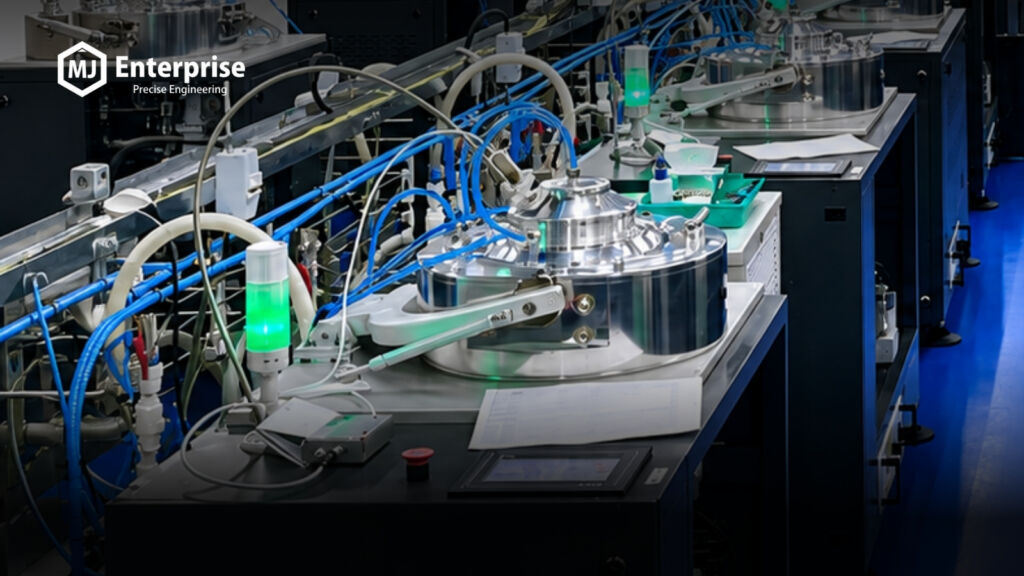
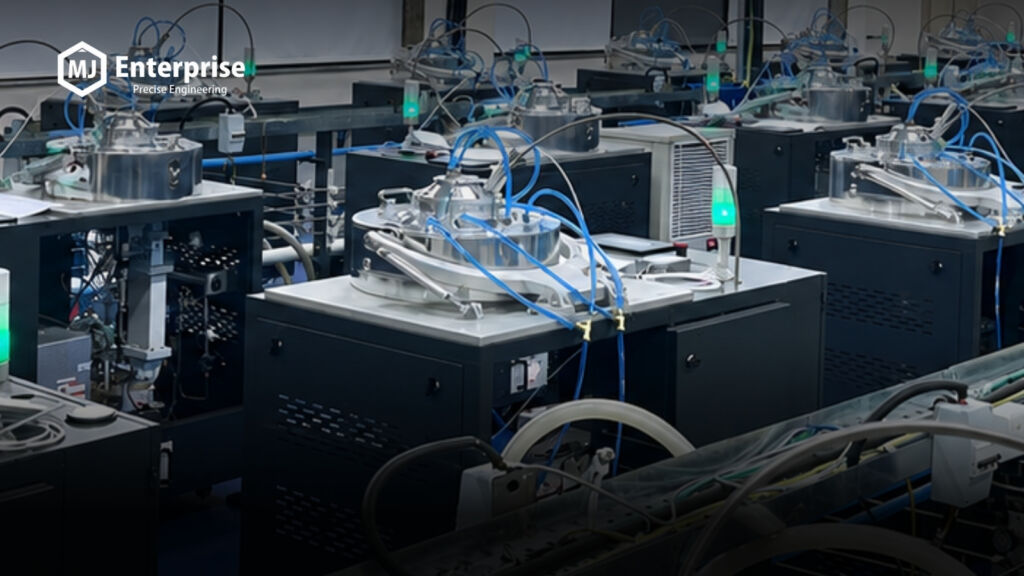
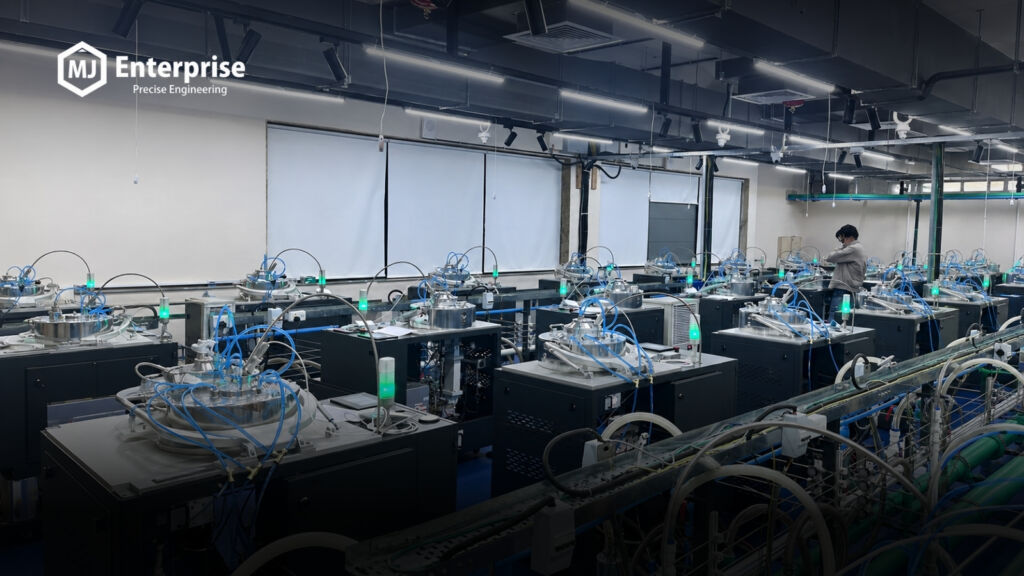
A CVD diamond machine creates the controlled environment needed to grow diamond from carbon containing gases. In industrial systems, gas chemistry, pressure, plasma energy, substrate temperature, and cooling must remain stable for many hours.
This is why performance cannot be judged by chamber size or microwave power alone. A stable growth run depends on several systems working together. Changes in gas flow, pressure, thermal balance, or plasma position can influence growth rate, crystal quality, repeatability, and machine uptime. Research on microwave plasma diamond reactors confirms that microwave power, pressure, gas flow, and thermal conditions interact strongly during growth.
How Does a CVD Diamond Machine Grow Diamond?
In a typical microwave plasma process, a polished diamond seed is placed on a substrate holder inside the reactor. The chamber is evacuated and a controlled gas mixture is introduced. Hydrogen is usually the dominant process gas, while methane supplies carbon.
Microwave energy activates the gas and creates plasma above the substrate. Reactive carbon species reach the hot seed surface and support diamond growth. Hydrogen also plays an important role in CVD diamond synthesis. A cvd diamond growing machine therefore depends on precise control of gas composition, pressure, plasma behavior, temperature, and contamination.
The 6 Main Components of a CVD Diamond Machine
1. CVD Diamond Machine Vacuum Chamber
The vacuum chamber is the environment where growth occurs. It must remain sealed while handling heat, plasma exposure, gas flow, viewing ports, electrical connections, and cooling lines.
Vacuum integrity is critical. Air leakage can introduce oxygen, nitrogen, moisture, and other contaminants. Chamber geometry also matters because nearby metallic surfaces influence electromagnetic behavior in microwave plasma systems. Machining accuracy, flange alignment, sealing surfaces, and internal cleanliness all contribute to stable operation.
Studies of microwave plasma reactors have shown that reactor geometry and leak prevention are important for maintaining the intended plasma and process environment.
2. Gas Delivery and Flow Control System
The gas delivery system controls what enters the reactor. It normally includes gas lines, valves, regulators, manifolds, filters, and mass flow controllers.
Mass flow controllers are important because CVD recipes depend on accurate gas ratios. If methane flow changes while hydrogen remains constant, the carbon concentration changes. This can influence growth conditions and crystal quality.
Clean internal surfaces also reduce contamination and unwanted reactions. In a cvd diamond manufacturing machine, the same gas recipe should be delivered repeatedly from one cycle to the next.
Precise precursor delivery is a fundamental requirement in CVD because variation in precursor flux can directly reduce process reproducibility.
3. Microwave Generator, Waveguide, and Plasma System
Microwave plasma CVD uses electromagnetic energy to activate process gases. The microwave generator supplies energy. The waveguide transfers it toward the reactor. The cavity or resonator helps create the field that sustains plasma.
Plasma shape and stability depend on microwave power, pressure, gas flow, and reactor geometry. Poor energy coupling can cause the plasma to shift or heat the substrate unevenly.
The goal is not simply to create plasma. It is to maintain controlled plasma in the correct position above the growth surface.
4. Substrate Holder and Thermal Management System
The substrate holder fixes the diamond seed at a defined position relative to the plasma. It also affects heat transfer between the seed, holder, cooling system, and chamber.
Seed temperature is a sensitive process variable. Poor flatness, inconsistent contact, or uneven cooling can create temperature differences across the growth area.
Materials such as molybdenum are often used for demanding substrate holding applications because they tolerate high thermal loads. The exact holder design depends on reactor geometry, seed dimensions, process temperature, and cooling strategy.
Why CVD Diamond Machine Seed Position Matters
If two seeds sit at different heights, they can experience different plasma and thermal conditions even when the process recipe is identical.
Accurate seed pockets and repeatable holder positioning help reduce this variation. Precision substrate holders, microwave cavity bodies, vacuum chambers, gas delivery components, and cooling assemblies are therefore critical mechanical elements in diamond growth equipment.
5. Vacuum Pumping and Pressure Control System
The vacuum system removes air before processing and continuously removes gases during operation. It may include a vacuum pump, pressure sensors, valves, throttle control, and exhaust connections.
Pressure affects gas transport and plasma behavior. Changes in pressure can alter plasma dimensions, energy transfer, and growth conditions.
A powerful pump alone is not enough. The machine must regulate pressure smoothly while process gases are flowing. Stable pressure control is therefore an important part of recipe repeatability.
6. Cooling and Process Control System
A CVD diamond making machine generates significant heat. Cooling water may be used around the chamber, microwave components, substrate assembly, seals, and other sensitive areas.
Poor cooling can create thermal drift, reduce seal life, and change process stability.
The control system ties the machine together by monitoring gas flow, pressure, microwave power, temperature, and cooling status. Safety interlocks can stop the process if a critical condition moves outside an acceptable range.
How CVD Chemical Vapor Deposition Components Work Together
The six systems are connected. Higher microwave power can change substrate temperature. Pressure can change plasma shape. Gas flow influences chemistry. Cooling affects thermal stability.
For this reason, a cvd chemical vapor deposition system should be evaluated as an integrated process platform. Strong individual components matter, but stable integration is what supports repeatable results. Generic CVD systems similarly depend on coordinated gas delivery, reaction chambers, energy sources, vacuum systems, and exhaust management.
What Determines the Performance of a CVD Diamond Machine?
The most useful performance indicators are vacuum integrity, repeatable gas delivery, stable plasma behavior, thermal uniformity, reliable cooling, and consistent process monitoring.
A well-engineered machine should reproduce similar operating conditions across repeated growth cycles. That repeatability helps turn a laboratory process into a dependable manufacturing process.
Conclusion
A CVD diamond machine combines vacuum engineering, gas handling, microwave energy, thermal management, cooling, and automation.
Understanding these six systems helps manufacturers evaluate a cvd diamond growing machine, compare machine designs, and investigate process variation based on engineering performance rather than headline specifications alone.
Need a CVD machine for your manufacturing application? Talk to MJ Enterprise for engineered CVD solutions built around your process needs.
FAQs
What are the main components of a CVD diamond machine?
A CVD diamond machine mainly includes a vacuum chamber, gas delivery system, microwave plasma system, substrate holder, vacuum and pressure system, and cooling and process controls. These systems work together to maintain stable diamond growth conditions.
What gases are used in a CVD diamond growing machine?
Hydrogen and methane are commonly used for microwave plasma diamond growth. Hydrogen forms the main process environment, while methane supplies the carbon required for diamond formation.
Why is vacuum important in a CVD diamond machine?
Vacuum helps remove atmospheric gases and allows the reactor to operate at the required process pressure. Stable vacuum conditions also help control gas chemistry, plasma behavior, and contamination.
What controls diamond quality inside a CVD machine?
Diamond growth quality depends on gas composition, pressure, microwave power, substrate temperature, seed position, plasma stability, and process cleanliness. These variables must remain controlled throughout the growth cycle.
What is the difference between a CVD machine and an MPCVD machine?
CVD describes the wider chemical vapor deposition process family. MPCVD is a specific form of CVD that uses microwave generated plasma to activate gases and is widely used for synthetic diamond growth.